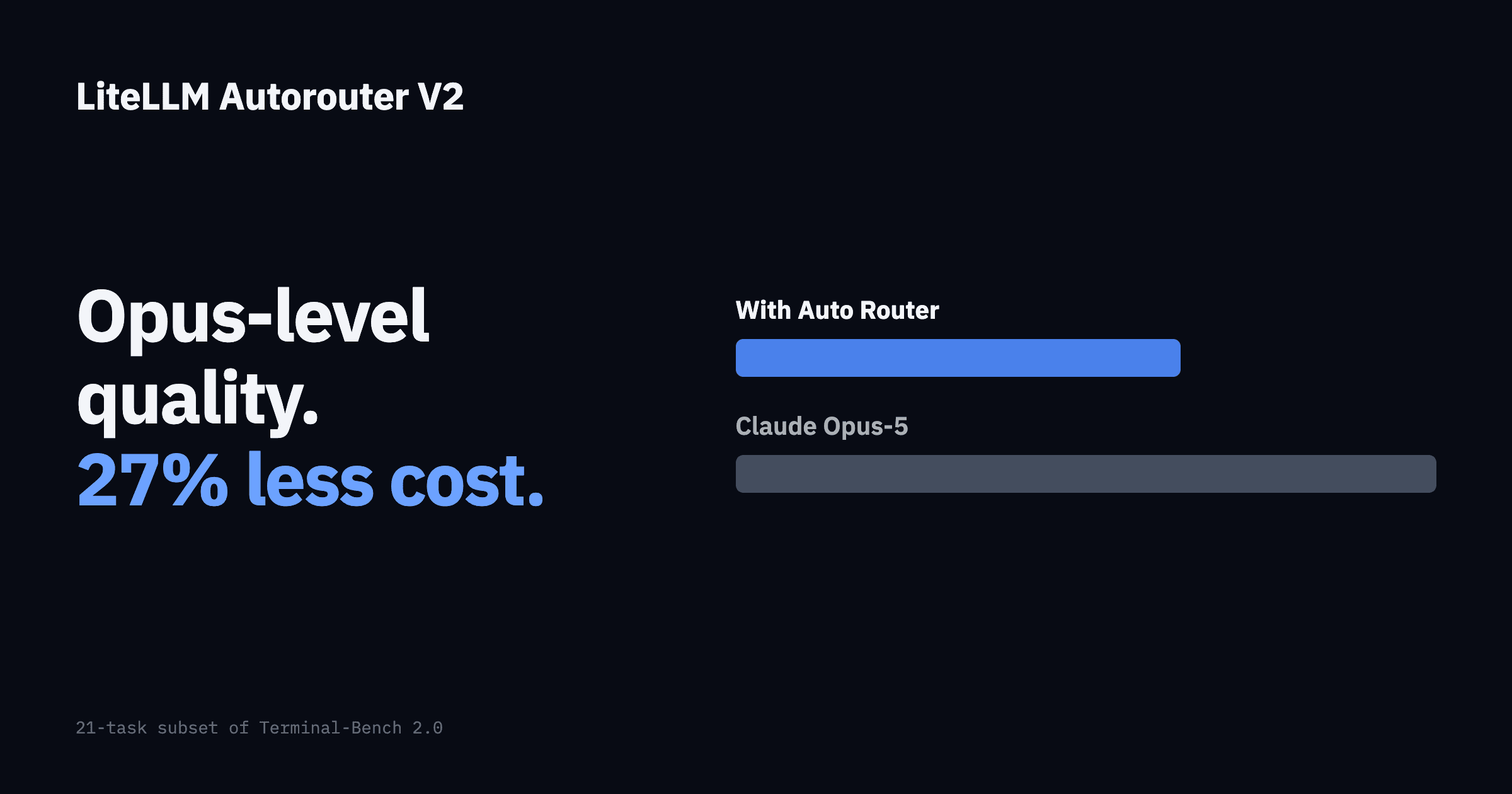
Auto Router: Opus level quality at up to 27% lower cost

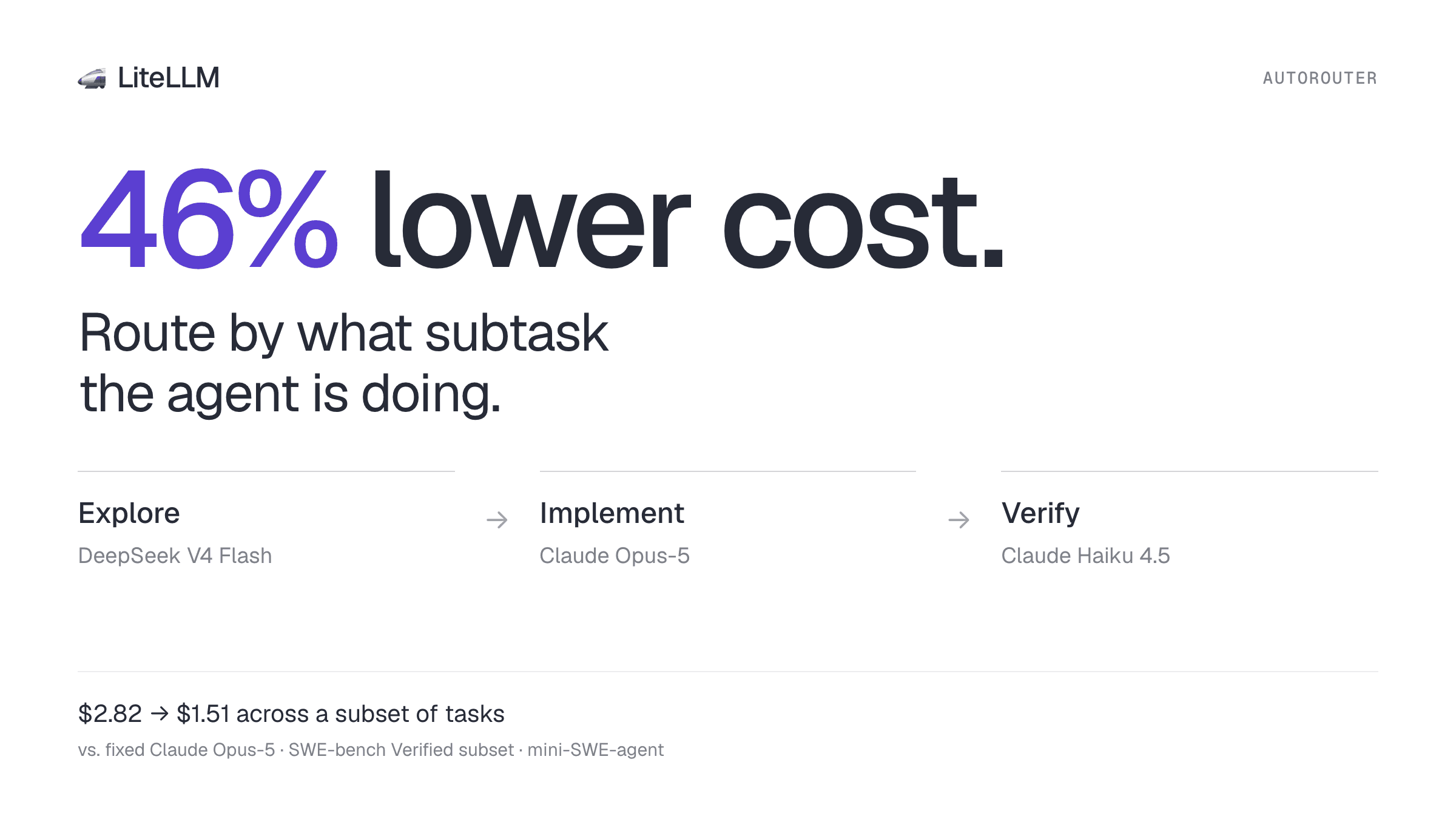
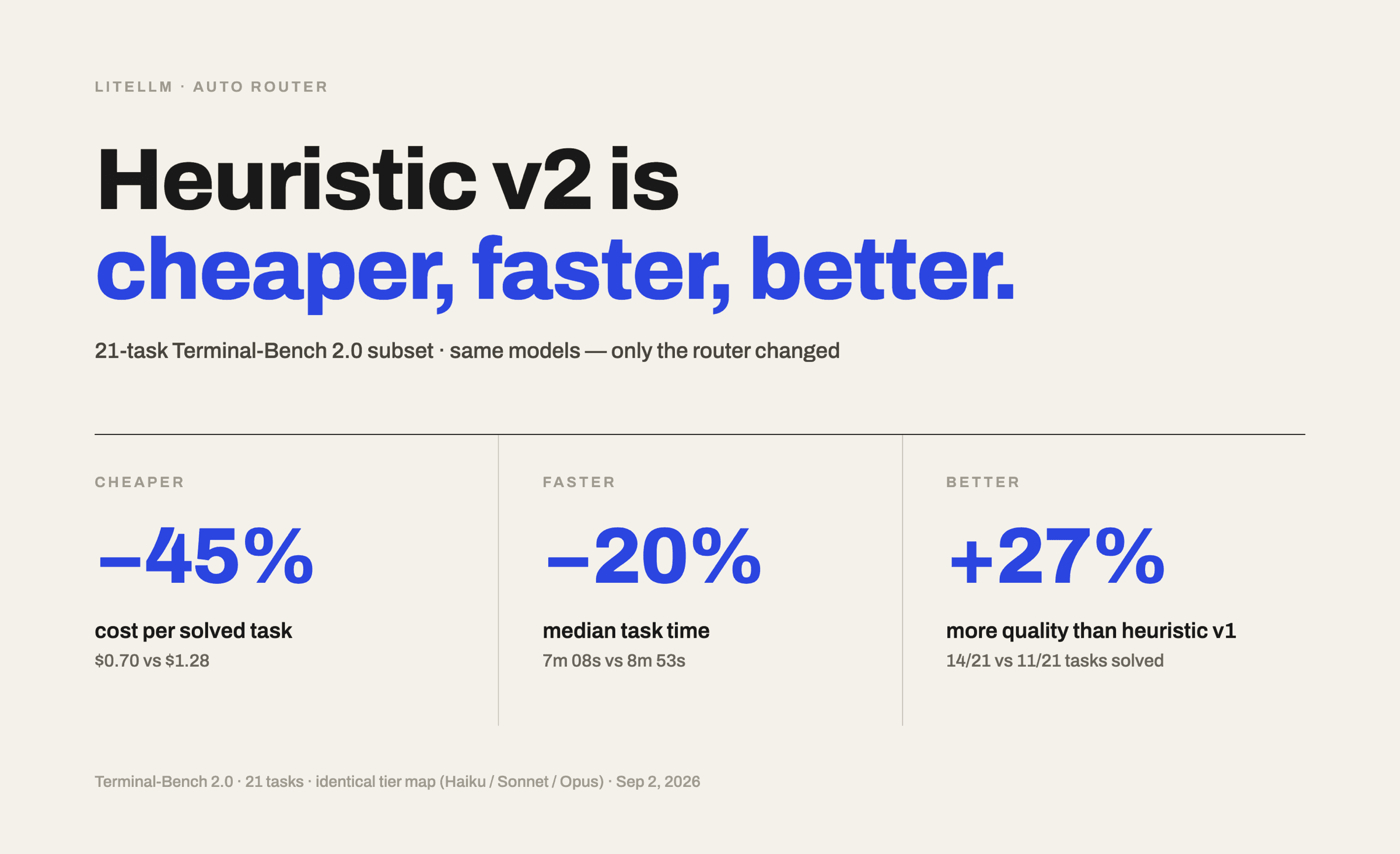
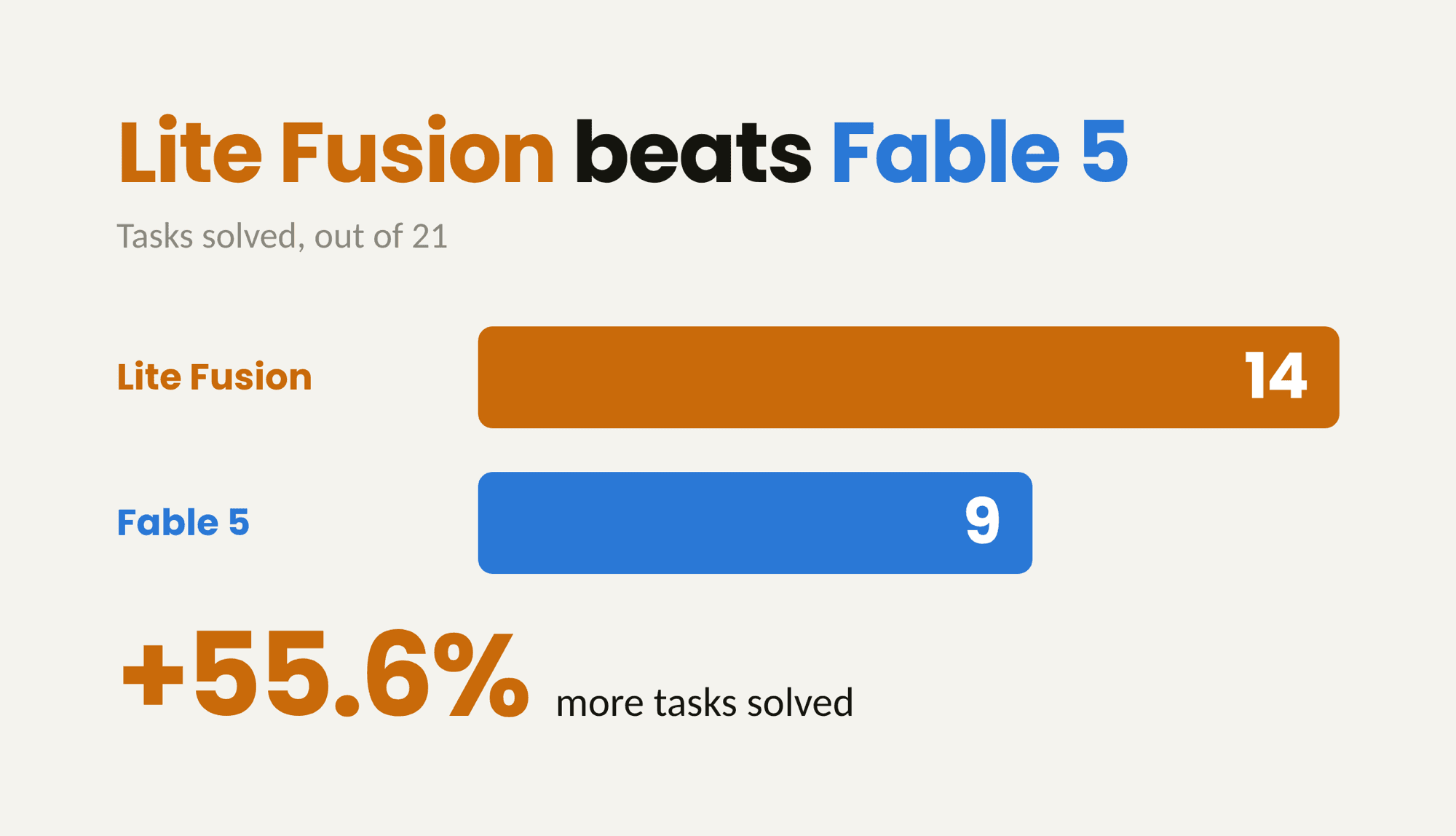
An auto router matched Claude Opus-5 solve rate on a 21 task subset of Terminal-Bench 2.0 at 27% lower cost. Every arm ran the same 21 tasks, so the comparisons are like for like.

An auto router matched Claude Opus-5 solve rate on a 21 task subset of Terminal-Bench 2.0 at 27% lower cost. Every arm ran the same 21 tasks, so the comparisons are like for like.


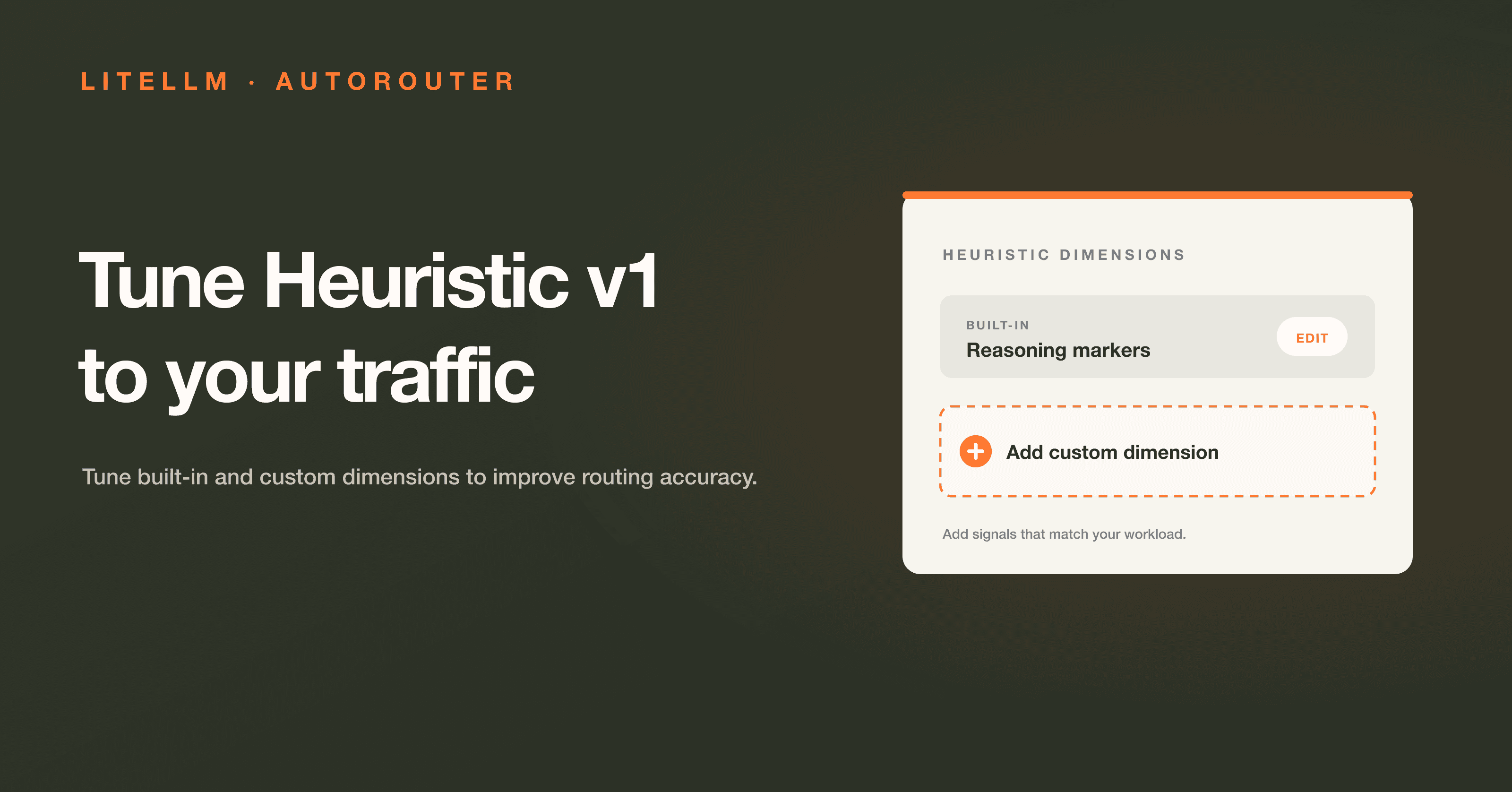
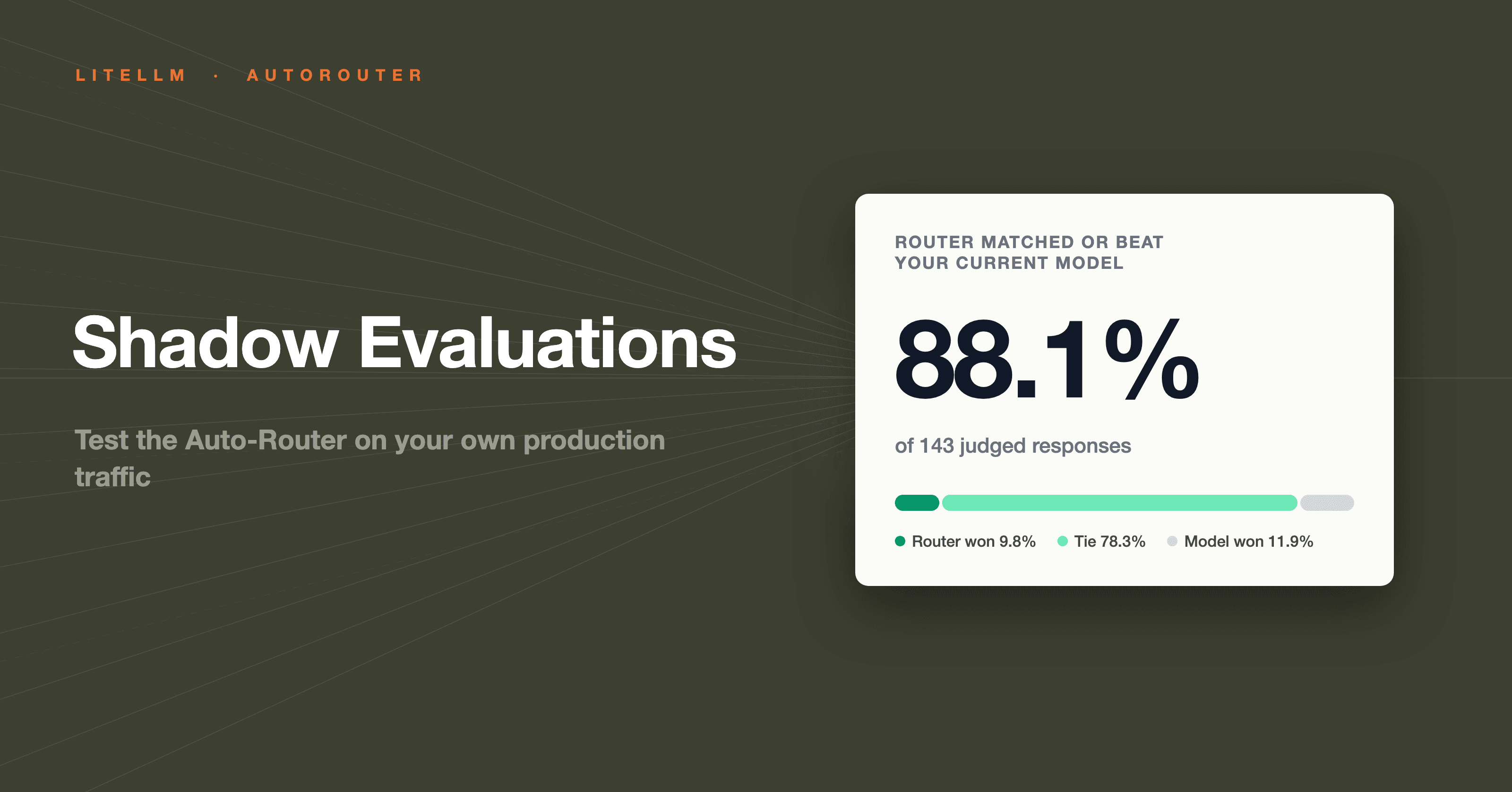
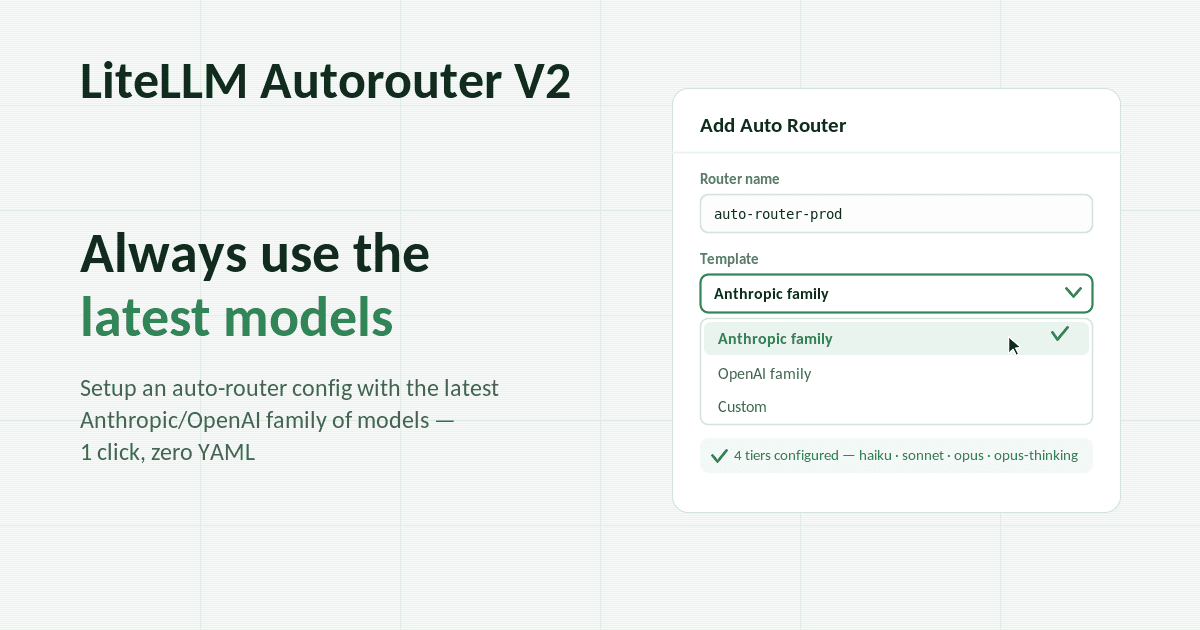
We've made it easier than ever to setup and test your Auto-Router, and with customizable tier names + classifier system prompts you can go beyond complexity routing.

Get early access, work directly with the LiteLLM team, and influence the roadmap with your production traffic.
Apply to Become a Design PartnerAlready testing it? Share your results in discussion #32168.
v1.97 makes three changes to the auto router.
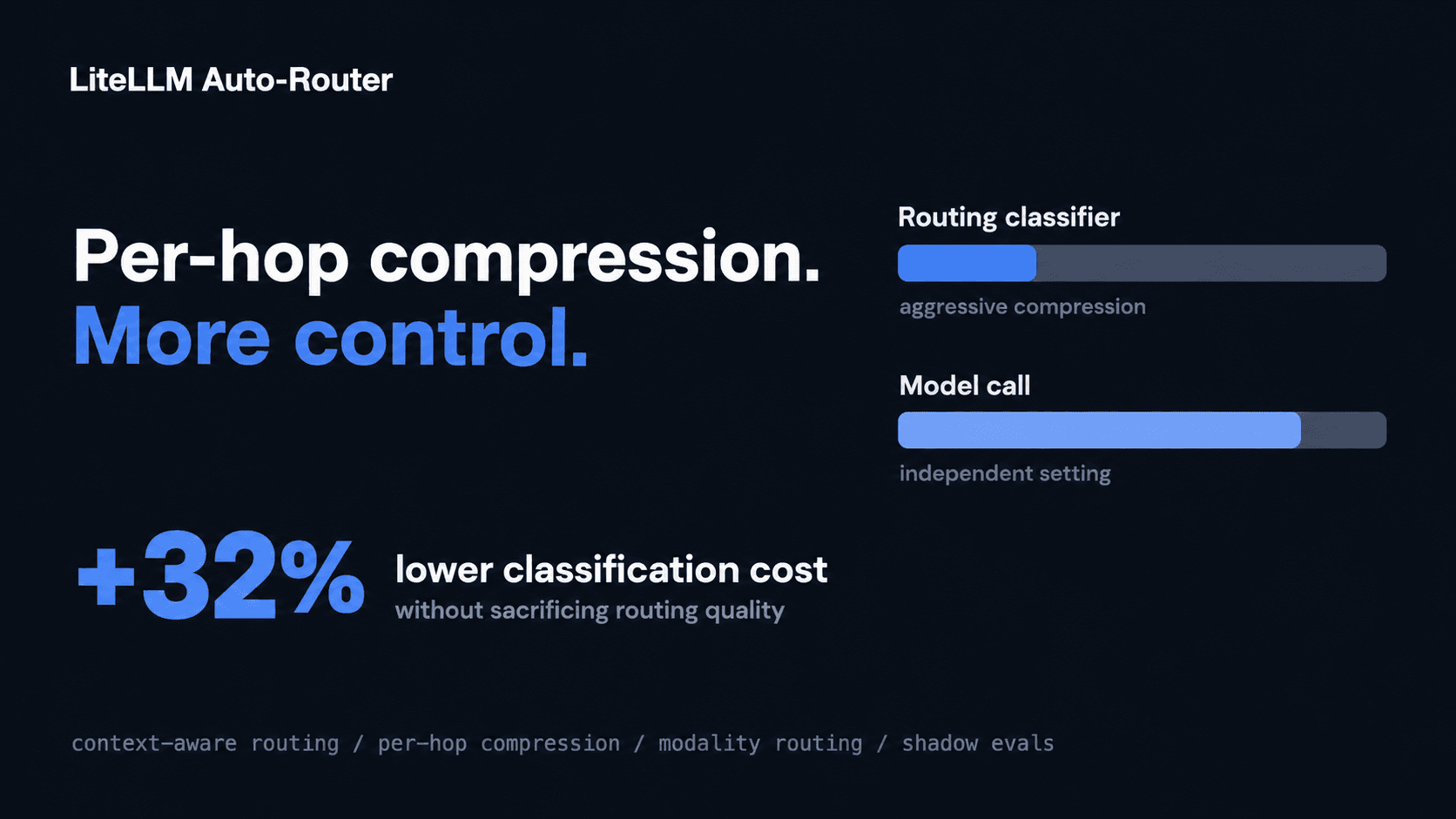
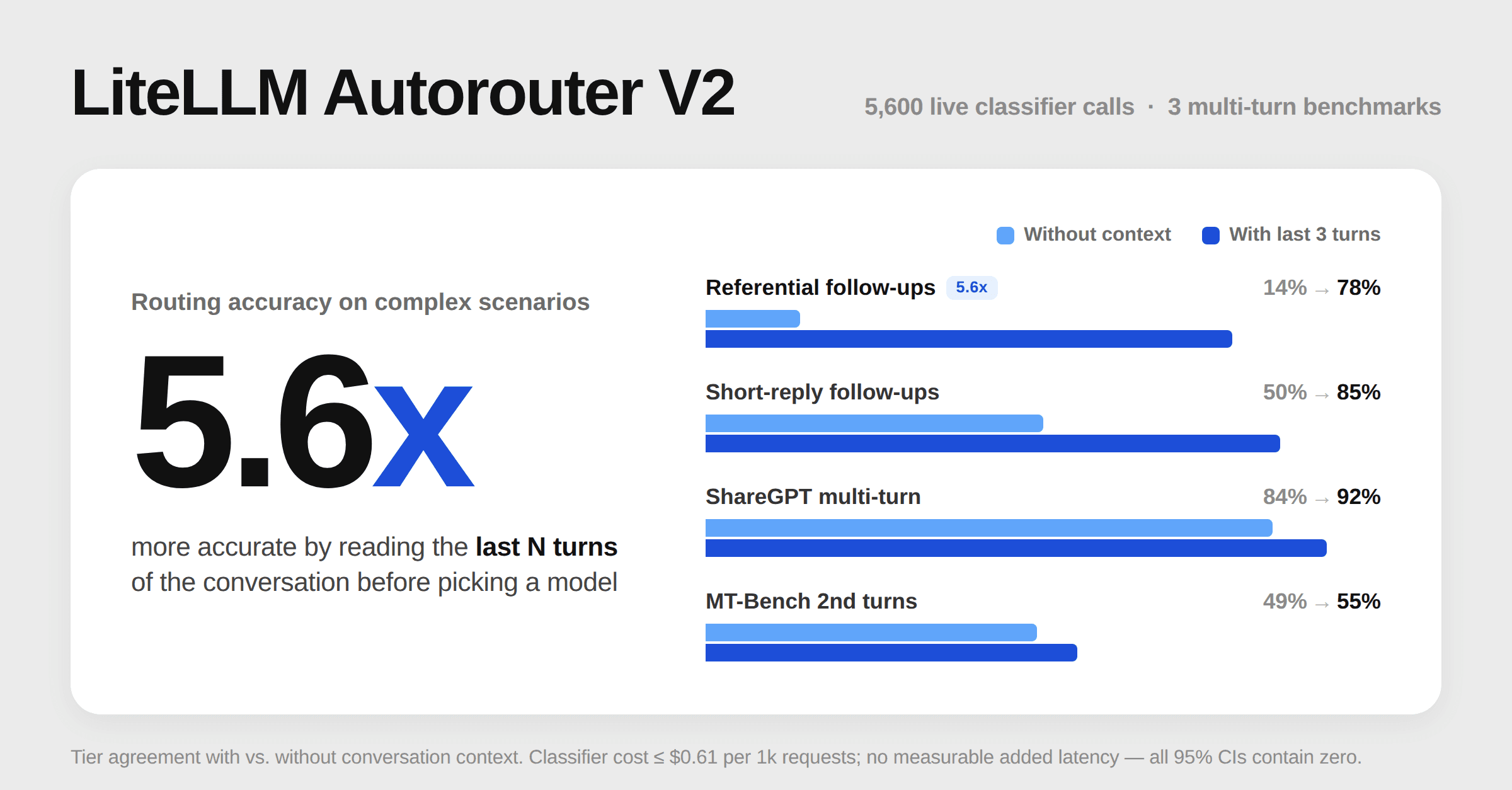
classifier_context_window_size now defaults to 3 (LLM classifier only), and session_affinity now defaults to false (all routers). Config files are not modified, but the new defaults apply to any key left unset, so a config that never mentioned session_affinity will reclassify every turn after upgrading. Configs that set either key explicitly are unaffected.

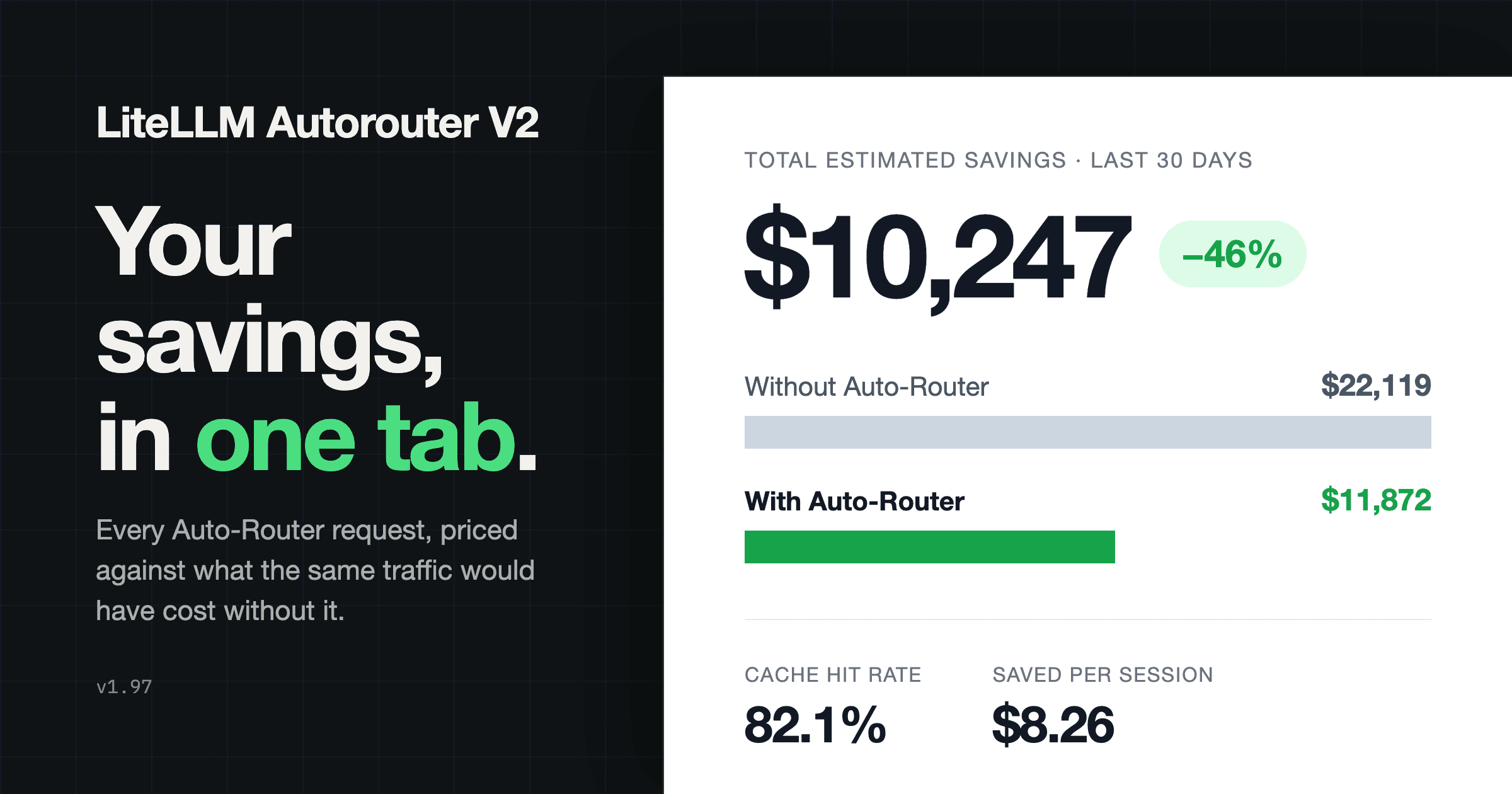
Yes, you can use prompt caching with Auto-Routing. The two compound rather than cancel out. We measured it across five datasets, two of which report what the provider's cache actually did.

Auto routing promises a smaller bill without a worse answer. We measured both halves against a baseline that sends every request to claude-opus-5: 8,619 graded prompts and cost simulations over 14,000 real conversations.
Router plugins run on the proxy from v1.94.x. The design is still evolving; tell us how you'd use it and what you'd want next in the autorouter discussion on GitHub (#32168).
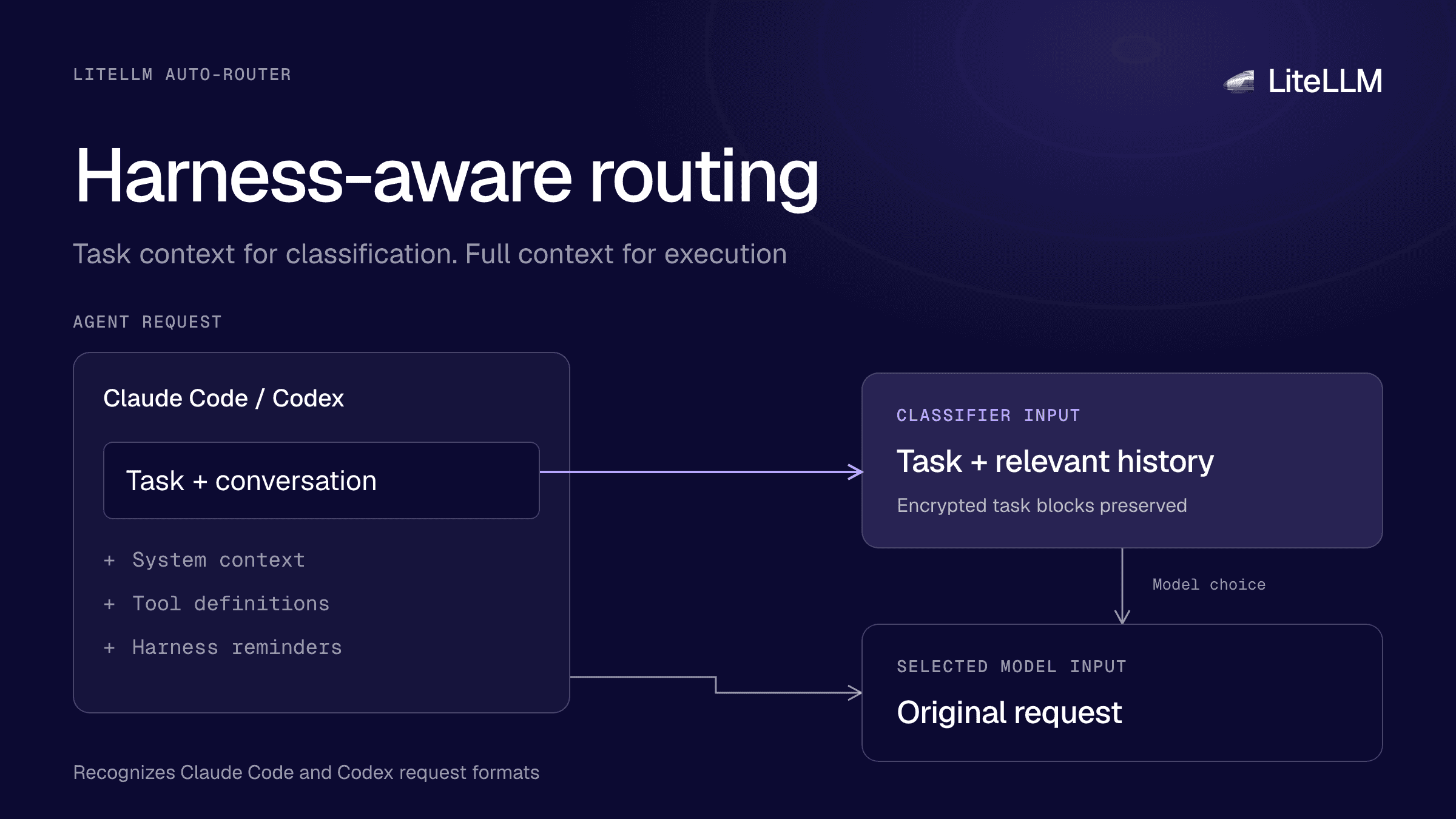
Router plugins are now available on LiteLLM. Each plugin receives the routing context, enriches it, and hands it to the next before the router makes the final decision.
The push came from the autorouter discussion (#32168): teams wanted to layer their own signals (language detection, domain classification, tenant policy, budget caps) onto routing without waiting for each one to land in core. This plugin extension lets teams make these changes while keeping LiteLLM's routing core stable.
Auto Router v2 ships in v1.94.x. The earliest dev release cuts Tuesday, 2026-07-14. Suggestions and feedback: discussion #32168.
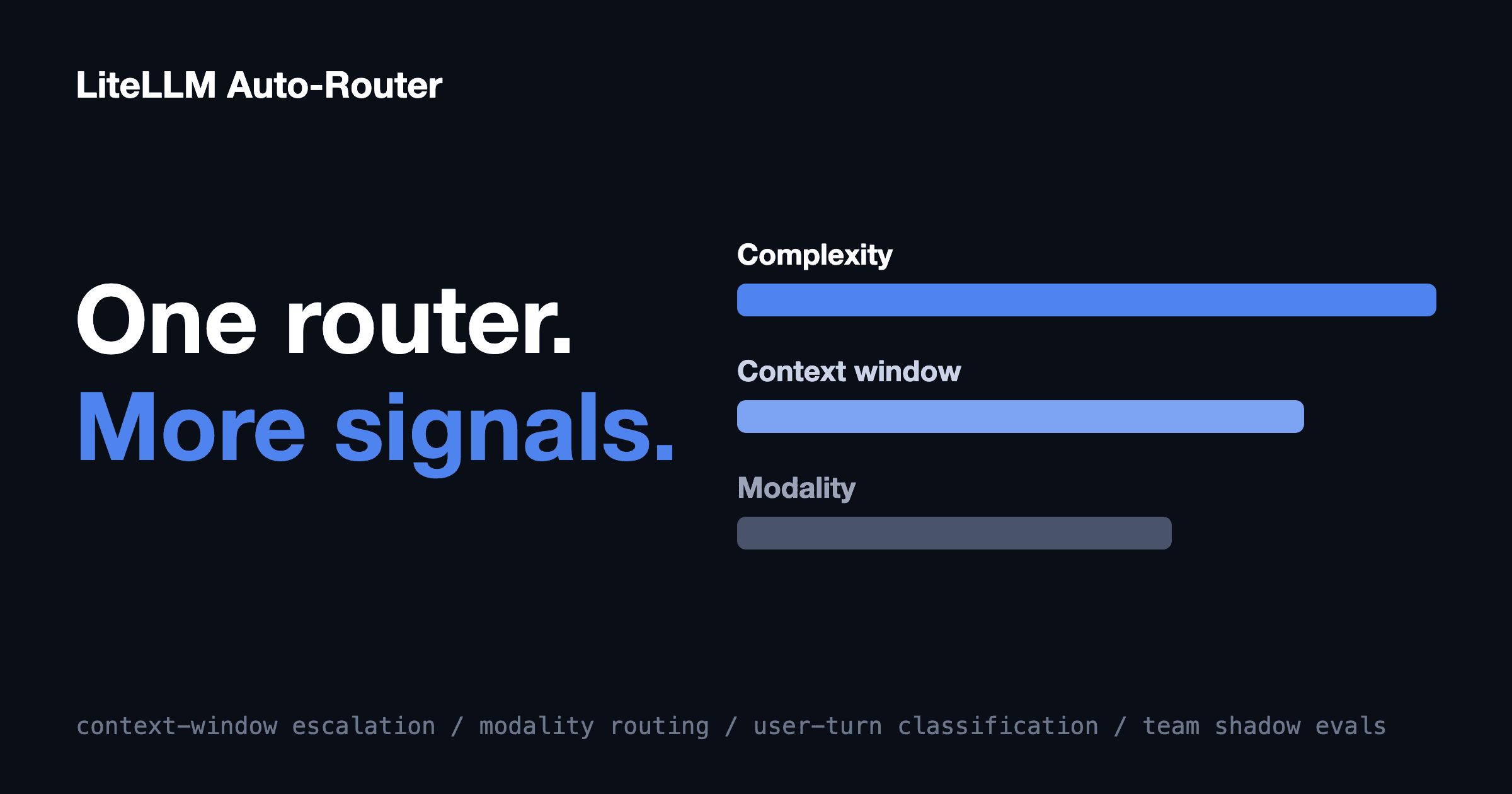
Auto Router v2 collapses complexity, semantic, and adaptive routing into a single auto_router/complexity_router. One config now covers heuristic scoring, LLM classification, lexical or semantic keyword rules, and Thompson-sampled tier pools.
The push came from the community. On discussion #32168, users pointed out that all three routing strategies should converge into a single Auto Router. One router with configurable signals and weights keeps the API simple while letting the routing engine evolve internally, instead of forcing you to pick a mode up front.
The operational half came from discussion #32172: predictable beats clever for debuggability. A fixed, versioned mapping from capability class to model is what makes "why did this response cost 4x today" answerable after the fact.
LiteLLM now supoports videos character, edit and extension apis.